
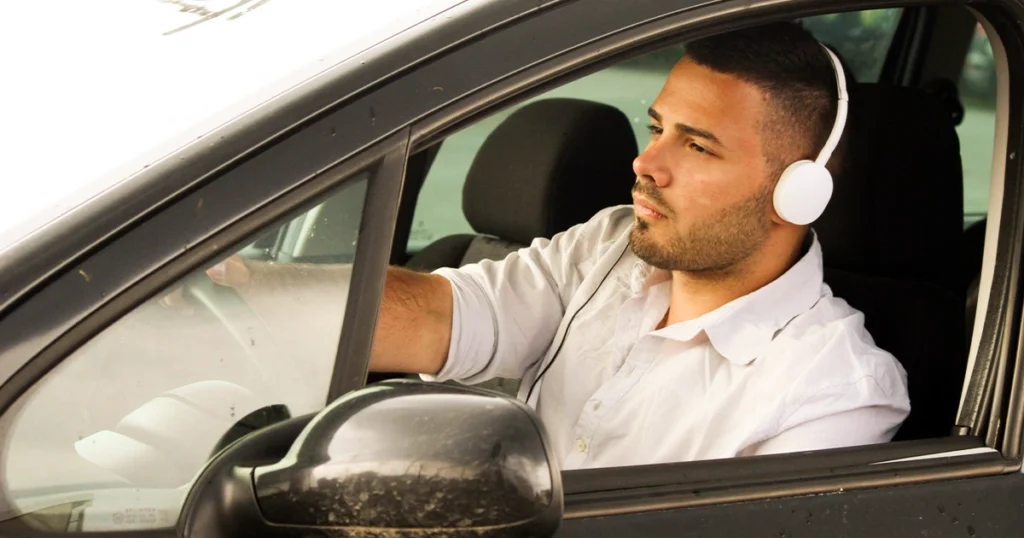
With hands-free technology becoming an integral part of everyday driving, many Texas motorists wear headphones or earbuds for navigation, music, or making calls. This raises an important legal question: Is wearing headphones while driving actually allowed under Texas law?
The short answer is yes, Texas does not have a specific law that bans headphones while driving. However, legality does not mean immunity. If headphone use causes driving to become distracted, it can lead to citations, accidents, or increased liability, situations where a Houston car accident lawyer can help evaluate responsibility and protect a driver’s legal rights.
Traffic Laws on Headphone Use
Even without a direct ban, officers rely on broader provisions of the Texas Transportation Code when evaluating unsafe driving. Commonly applied statutes include:
- § 545.401 – Reckless Driving, when conduct shows disregard for safety
- § 545.060 – Failure to Maintain a Single Lane
- § 545.351 – Unsafe Speed
- § 545.062 – Following Too Closely
If headphone use contributes to delayed reactions, lane drifting, or missed warnings, citations may be issued under these laws.
Can You Be Stopped for Wearing Headphones?
No. Wearing headphones alone is not grounds for a traffic stop in Texas. However, police may initiate a stop if your driving behavior suggests reduced awareness or control, such as:
- Inconsistent lane position
- Slow or erratic responses to traffic conditions
- Missed traffic signals
- Abrupt braking or acceleration
Once stopped, headphone use may be considered as part of the overall assessment, especially if it contributed to distracted driving.
Earbuds vs. Headphones
Texas law does not distinguish between:
- Over-ear headphones
- In-ear earbuds
- Wireless devices such as AirPods
- Single-ear or dual-ear use
Using one earbud instead of two does not automatically make driving lawful or safe. The legal standard remains whether the driver maintained proper awareness and control.
Accidents Involving Headphone Use
After a collision, headphone use often becomes part of the investigation. Even though it is legal, insurers and opposing parties may argue that headphone use contributed to the crash by showing the driver:
- Was not fully attentive
- Failed to hear warnings
- Reacted too slowly
Texas follows a comparative responsibility system, meaning partial fault can reduce compensation or increase liability. Distracted driving due to headphones can be considered in these determinations.
Charges and Consequences
Although Texas does not issue tickets specifically for wearing headphones, drivers may still face consequences such as:
- Careless or reckless driving citations
- Failure to control vehicle violations
- Fines, court costs, and points on a driving record
- Increased insurance premiums
- Reduced recovery in personal injury claims
The enforcement is indirect, but the impact can be substantial. An experienced Houston car accident lawyer can help minimize charges, challenge improper citations, and protect your driving record, ensuring that headphone use does not lead to unnecessary penalties or long-term consequences.
How Legal Representation Can Help
When headphone use is raised in a traffic stop or accident claim, assumptions can quickly turn into legal conclusions. An experienced Houston car accident lawyer can:
- Challenge claims that headphone use caused distraction
- Review whether citations are supported by evidence
- Examine crash reports and officer observations
- Push back against unfair fault allocation
Understanding how Texas law evaluates driver behavior, not devices, is critical.
Get Legal Help After an Incident
Wearing headphones while driving is not illegal in Texas, but it can still be misunderstood after a traffic stop or accident. Driving can become distracted when using headphones, which may increase liability if not properly defended.
If headphone use is being questioned in your case, contact Lakhani & McGrath to review your situation, protect your rights, and ensure Texas traffic laws are applied correctly to the facts.