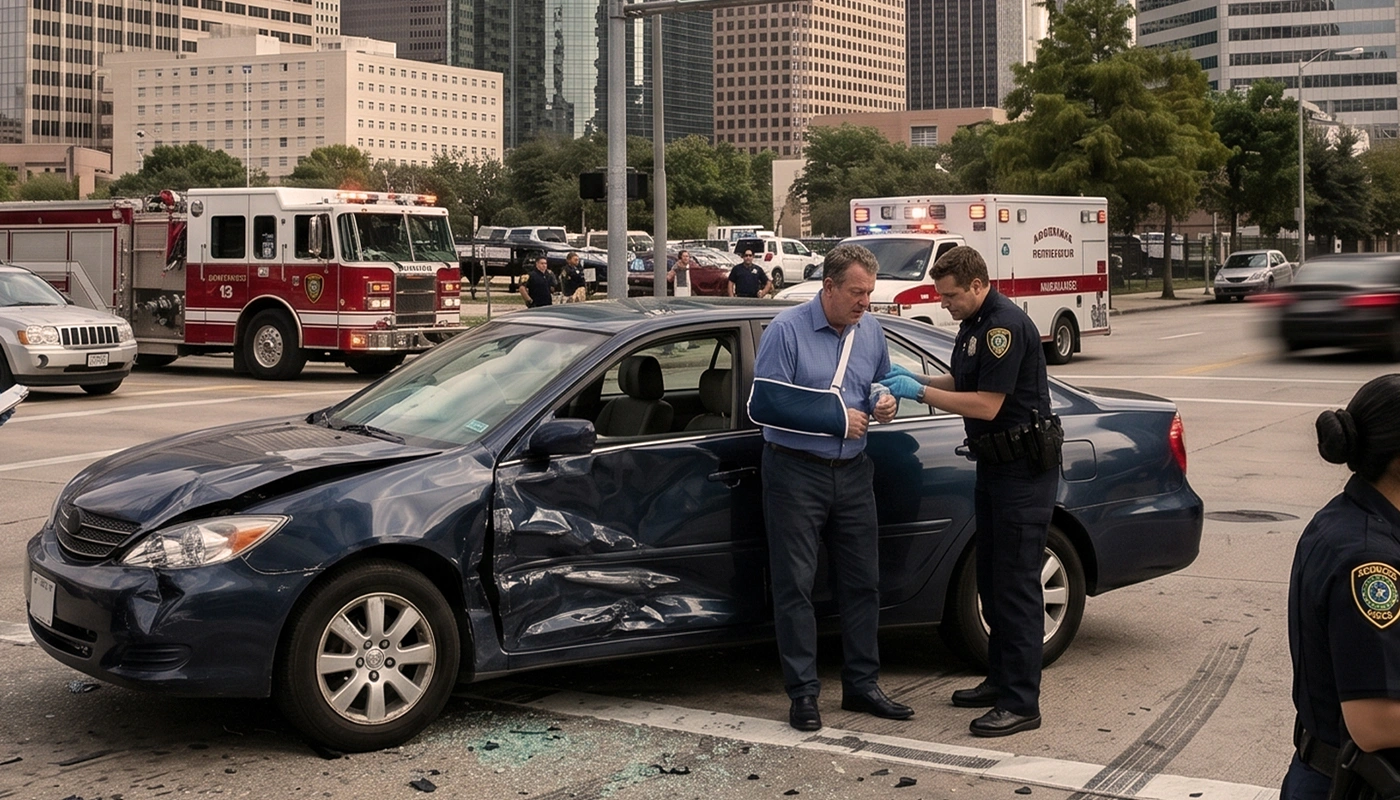

Car crashes can cause a wide range of head trauma, with symptoms appearing immediately or days later. Understanding the Types of Brain Injuries From Car Accidents helps identify warning signs and seek timely care. According to the Centers for Disease Control and Prevention, traumatic brain injuries lead to about 2.8 million emergency department visits each year in the U.S.
If you or a loved one has suffered head injuries in a car crash, speaking with an experienced auto accident attorney Houston can help you pursue the compensation needed for medical treatment, rehabilitation, and long-term recovery.
What Is a Traumatic Brain Injury (TBI)?
A traumatic brain injury (TBI) is a serious form of damage that happens when a sudden collision causes the head to experience violent movement or direct impact. This force can jostle the brain inside the skull, leading to bruising, bleeding, tearing of nerve fibers, and disruption of normal brain function, even if there’s no visible external wound.
Common Types of Brain Injuries From Car Accidents
When discussing types of brain injuries from car accidents, it helps to understand the specific forms of trauma that can occur and how they affect the brain. These injuries are common head injuries in car crashes and can range from mild to life-threatening.
Traumatic brain injuries generally fall into two main classifications:
- Closed Brain Injuries: These occur when the head experiences a violent blow or sudden movement, but the skull remains intact. The brain is injured from internal movement, swelling, or bleeding without penetration. Most car accident TBIs, including concussions and diffuse axonal injuries, fall into this category.
- Open (Penetrating) Brain Injuries: These happen when an object pierces the skull and directly damages brain tissue. Although less common in vehicle collisions, they can occur in severe crashes involving debris, shattered glass, or major impact trauma.
1. Concussions
A concussion is a mild traumatic brain injury caused by a sudden jolt or blow that disrupts normal brain function. Even without a direct strike to the head, rapid acceleration and deceleration in a crash can cause the brain to shift inside the skull. Symptoms may include headache, dizziness, confusion, nausea, and memory problems.
2. Hemorrhages
A brain hemorrhage involves bleeding inside or around the brain due to ruptured blood vessels. In car crashes, the violent impact can cause vessels to tear, leading to dangerous internal bleeding. Hemorrhages increase pressure inside the skull, which can quickly become life-threatening without emergency treatment.
3. Contusions
A contusion is a bruise on the brain tissue, typically caused by direct impact during a collision. These injuries may occur when the brain strikes the inside of the skull. Severe contusions sometimes require surgical removal if swelling or bleeding becomes significant.
4. Coup-Contrecoup Injuries
This injury pattern occurs when the brain is damaged at the point of impact (coup injury) and also on the opposite side of the brain (contrecoup injury) as it rebounds within the skull. High-speed car crashes commonly produce this dual-impact effect due to rapid forward and backward motion.
5. Diffuse Axonal Injuries (DAI)
Diffuse Axonal Injury is one of the most severe Types of Brain Injuries From Car Accidents. It occurs when rotational forces stretch and tear nerve fibers (axons) throughout the brain. DAIs are commonly associated with high-speed crashes and often result in prolonged unconsciousness or coma. Research published by the National Institutes of Health indicates that DAI is a major cause of severe TBI and long-term disability following motor vehicle trauma.
6. Hematomas
A hematoma is a localized collection of blood outside blood vessels, often forming between the brain and skull. Types include epidural and subdural hematomas. Subdural hematomas are particularly common in high-impact crashes and can worsen over hours or days. Immediate medical attention is critical because pressure buildup can cause permanent brain damage.
7. Anoxic and Hypoxic Brain Injuries
Anoxic brain injury occurs when the brain receives no oxygen, while hypoxic injury involves reduced oxygen supply. In car accidents, this can happen if breathing is obstructed, the heart stops, or severe blood loss occurs. Even a few minutes without adequate oxygen can cause irreversible brain cell death.
8. Skull Fractures
A skull fracture is a break in the cranial bone caused by blunt force trauma. Fractures may be linear, depressed, or compound, and they increase the risk of underlying brain injury or infection. The National Institutes of Health notes that skull fractures often accompany moderate to severe TBIs and require imaging studies to assess internal damage.
If you or a loved one is suffering after a serious crash and searching for the best car accident attorney near me, the experienced team at Lakhani & McGrath can help you pursue the compensation you deserve.
Legal Options for Victims of Head Injuries in Car Crashes
If you suffer a brain injury from a car accident in Texas, the law provides several legal options to seek compensation and protect your rights under state law:
- File a Personal Injury Lawsuit: Victims of a brain injury from a car accident can file a claim against the at-fault driver. You must prove duty of care, breach, causation, and damages such as medical expenses or lost income.
- Seek Compensation Through Insurance Claims: Texas follows a fault-based system, allowing injured victims to pursue compensation through the at-fault driver’s liability insurance. This can include medical bills, rehabilitation costs, and pain and suffering.
- Wrongful Death Claims: If the injury is fatal, surviving spouses, children, or parents may file a wrongful death claim. Compensation may cover funeral expenses, lost financial support, and loss of companionship.
- Statute of Limitations: In Texas, most claims for a brain injury from a car accident must be filed within two years of the crash. Missing this deadline can permanently bar your right to recover damages.
- Comparative Negligence Rule: Texas follows a modified comparative fault rule. You can recover damages if you are 50% or less at fault, but your compensation will be reduced by your percentage of responsibility.
How Can a Personal Injury Lawyer Help?
Consulting a qualified Texas personal injury attorney, especially an experienced traumatic brain injury lawyer, early can help ensure you meet critical deadlines, properly document your brain injury from a car accident, and pursue the full range of compensation available under Texas law.
- Investigate the Accident: An attorney gathers evidence such as police reports, medical records, and expert testimony to prove how the crash caused your brain injury.
- Determine the Full Value of Your Claim: They calculate both current and future damages, including medical treatment, rehabilitation, lost income, and long-term care needs.
- Build a Strong Legal Case: An attorney documents the medical impact of the injury and connects it to the accident to strengthen your claim.
- Calculate Long-Term Damages: TBIs can require years of treatment. An attorney evaluates future medical care, rehabilitation, lost earning capacity, and long-term disability costs.
- Represent You in Court if Necessary: If settlement negotiations fail, an attorney can file a lawsuit and advocate for your rights in court.
Get Legal Help Today
Understanding the types of brain injuries from car accidents is critical because these injuries can have lasting physical, emotional, and financial consequences. If you or a loved one is facing the aftermath of a crash, the experienced team at Lakhani & McGrath is ready to help.
Founded by attorneys Nadia Lakhani and Stephen J. McGrath, the firm brings years of experience, including time spent defending insurance companies, giving them valuable insight into how insurers evaluate and fight injury claims.