A motorcycle crash can leave riders facing serious injuries, costly medical bills, and questions about who is responsible for their losses. Determining what caused the accident is often the first step in establishing liability and pursuing compensation. A Houston motorcycle accident lawyer can evaluate the circumstances of the crash and help identify all potentially liable parties.
In Texas, the party whose negligence caused the crash may be held financially responsible for the resulting damages. Depending on the circumstances, liability may extend beyond another driver to include employers, manufacturers, or other responsible parties.
Primary Cause of Motorcycle Crashes
Many motorcycle accidents occur because other drivers fail to see motorcycles or properly yield the right of way. Due to their smaller size, motorcycles can be overlooked by motorists who are distracted, inattentive, or simply fail to check their surroundings before making a maneuver.
Left-Turn Accidents
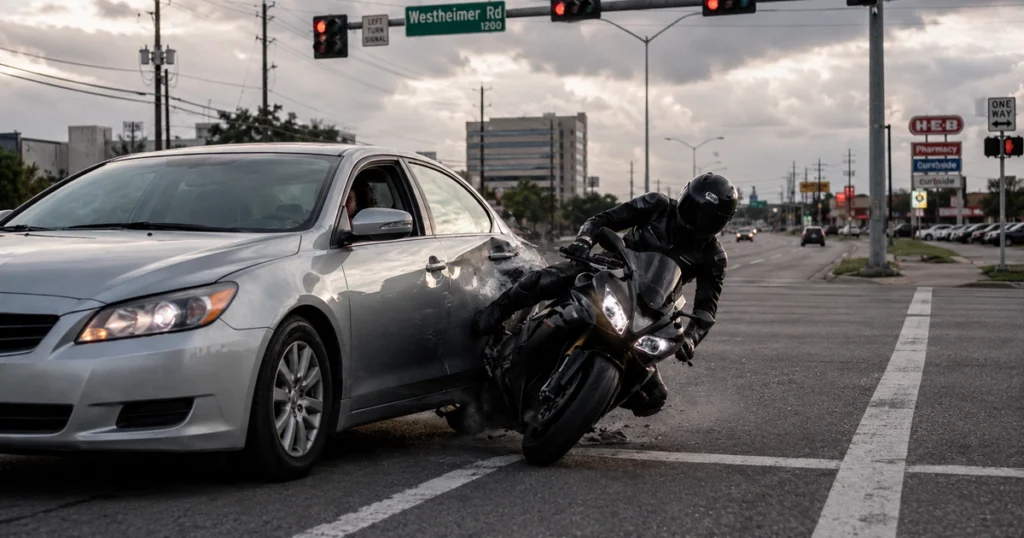
Left-turn accidents are one of the leading causes of motorcycle crashes. These collisions often occur when a driver turns left at an intersection and fails to accurately judge the speed or distance of an oncoming motorcycle. Because riders have little time to react, these accidents frequently result in severe injuries and significant property damage.
Failure to Yield
Drivers who fail to yield the right of way can create dangerous situations for motorcyclists. This often happens when motorists enter traffic, merge onto highways, or proceed through intersections without allowing sufficient space for an approaching motorcycle. Failure-to-yield crashes are especially common in busy traffic areas where drivers may overlook smaller vehicles.
Distracted Driving
Distracted driving continues to be a major factor in motorcycle accidents. Drivers who are texting, talking on the phone, adjusting navigation systems, or engaging in other distractions may fail to notice nearby motorcycles. Even a few seconds of inattention can prevent a driver from reacting appropriately and avoiding a collision.
Unsafe Lane Changes
Motorcycles can be difficult to spot in a vehicle’s blind spots, making unsafe lane changes particularly hazardous. When drivers fail to check mirrors, use turn signals, or look carefully before changing lanes, they may move directly into a rider’s path. These crashes frequently occur on highways and multi-lane roads.
Impaired Driving
Alcohol and drug impairment can significantly affect a driver’s judgment, reaction time, and ability to recognize hazards. Impaired drivers may fail to see motorcycles, misjudge distances, or react too slowly to changing traffic conditions. As a result, crashes involving impaired drivers often lead to serious or fatal injuries for motorcyclists.
Motorcycle crashes are often caused by preventable driver errors rather than rider negligence. If you’ve been injured, a Houston motor vehicle accident attorney can help you understand your legal options and pursue the compensation you deserve.
Who Can Be Held Liable for a Motorcycle Crash?
Liability depends on who caused or contributed to the accident. While another driver is often responsible, multiple parties may share liability depending on the circumstances. If you’re searching for a motorcycle accident attorney near me, understanding who may be held accountable is an important first step. Potentially liable parties include:
- Negligent Drivers: Motorists who violate traffic laws, drive distracted, speed, fail to yield, or engage in other careless behavior may be held responsible when their actions directly cause a motorcycle accident.
- Commercial Vehicle Operators: Truck drivers, delivery drivers, and other commercial vehicle operators may be liable if they cause a collision while performing job-related duties or operating their vehicles negligently.
- Employers: A company may be held responsible when its employee causes an accident while working within the scope of their employment. Employers may also face liability for negligent hiring, training, or supervision.
- Vehicle Manufacturers: Manufacturers can be liable when defective motorcycle parts, vehicle components, or safety systems contribute to an accident or make injuries more severe than they otherwise would have been.
- Government Entities: State or local government agencies may be responsible if hazardous road conditions, poor roadway design, missing traffic signs, or inadequate maintenance contributed to the crash.
How Is Negligence Proven?
To recover compensation, an injured rider must show that another party acted negligently and that the negligence directly caused the accident. Evidence plays a critical role in establishing fault, identifying liable parties, and supporting the value of a motorcycle accident claim. Common evidence used to establish negligence includes:
- Police Accident Reports: Officers responding to the scene typically document important details about the crash, including driver statements, witness information, roadway conditions, and any traffic violations that may have contributed to the accident.
- Witness Statements: Independent witnesses can provide an objective account of what happened before and during the collision. Their testimony may help clarify disputed facts and support a rider’s version of events.
- Traffic Camera or Surveillance Footage: Video recordings from traffic cameras, nearby businesses, or surveillance systems can provide clear evidence of how the accident occurred and who may have been responsible.
- Photographs of the Crash Scene: Pictures of vehicle damage, skid marks, road conditions, traffic signals, and visible injuries can preserve critical evidence that may no longer be available later in the claims process.
- Medical Records Documenting Injuries: Medical documentation helps connect an injured rider’s condition directly to the accident while demonstrating the nature and severity of the injuries sustained.
- Accident Reconstruction Analysis: Experts may analyze physical evidence, vehicle damage, and impact points to determine how the collision occurred and whether a party acted negligently.
- Vehicle Inspection Reports: Inspections of the motorcycle and other vehicles involved may reveal mechanical issues, defects, or damage patterns that help establish the cause of the crash.
Strong evidence often makes the difference between a disputed claim and a successful recovery by helping prove exactly how the accident occurred and who should be held liable.
What Happens if Multiple Parties Share Fault?
Some motorcycle crashes involve more than one responsible party. Texas law allows fault to be divided among multiple individuals or entities based on their contribution to the accident.
For example, a distracted driver may be primarily responsible for a collision, while a roadway defect or vehicle malfunction may also contribute to the crash. Determining each party’s share of responsibility requires a thorough investigation and review of all available evidence. Because multiple-party claims can become complex, identifying every liable party is often essential to maximizing compensation.
Does Comparative Fault Affect Liability?
Texas follows a modified comparative fault rule under Texas Civil Practice and Remedies Code Section 33.001. An injured motorcyclist may recover compensation as long as they are not more than 50 percent responsible for the accident. If they are found partially at fault, their compensation is reduced by their percentage of responsibility. For example:
- 10% Fault: Compensation reduced by 10%.
- 25% Fault: Compensation reduced by 25%.
- 50% Fault: Compensation reduced by 50%.
- More Than 50% Fault: Compensation is barred under Texas law.
Insurance companies frequently use comparative fault arguments to reduce the amount they must pay, making evidence and legal representation especially important.
What Compensation May Be Available?
A successful motorcycle accident claim may allow an injured rider to recover compensation for both financial and personal losses resulting from the crash. Potential damages include:
- Medical Expenses: Compensation may cover emergency room treatment, hospital stays, surgeries, physical therapy, prescription medications, and any future medical care related to the accident injuries.
- Lost Wages: Injured riders may recover income lost while they were unable to work during their recovery period. This can include missed salary, hourly wages, bonuses, and other employment benefits.
- Reduced Earning Capacity: If the injuries result in permanent limitations that affect the rider’s ability to perform their job or earn income in the future, compensation may be available for those losses.
- Property Damage: Victims may recover the cost of repairing or replacing their motorcycle, riding gear, helmet, and other personal property damaged in the collision.
- Pain and Suffering: Compensation may be awarded for the physical pain, emotional distress, mental anguish, and overall impact the injuries have had on the rider’s quality of life.
The compensation available in a motorcycle accident claim varies based on the extent of the damages and the evidence supporting those losses.
Why Legal Representation Matters
Determining what caused a motorcycle crash and identifying every liable party often requires a detailed investigation. Insurance companies may dispute fault, minimize injuries, or attempt to shift blame to the rider to reduce compensation. Our Houston personal injury lawyer can:
- Investigate the Accident Thoroughly: A lawyer can review police reports, interview witnesses, analyze evidence, and examine the circumstances surrounding the crash to determine exactly what happened.
- Preserve Critical Evidence Before It Disappears: Important evidence such as surveillance footage, vehicle data, witness testimony, and accident scene documentation can be lost over time if it is not preserved promptly.
- Identify All Potentially Liable Parties: Some motorcycle accidents involve multiple responsible parties, including negligent drivers, employers, manufacturers, or government entities. Identifying every liable party can help maximize compensation.
- Work With Accident Reconstruction Experts: In complex cases, attorneys may rely on experts to analyze vehicle damage, roadway conditions, and other evidence to establish fault and strengthen the claim.
- Negotiate With Insurance Companies: Insurance adjusters often attempt to settle claims for less than their full value. An attorney can handle negotiations and advocate for fair compensation.
- Prepare the Case for Trial if Necessary: If a reasonable settlement cannot be reached, a lawyer can build a strong case and present it in court to pursue the compensation the injured rider deserves.
Having legal representation helps ensure that injured riders are not unfairly blamed for an accident they did not cause and that their rights remain protected throughout the claims process.
Injured in a Motorcycle Crash? Contact Lakhani & McGrath
Determining liability after a motorcycle crash is critical to recovering compensation for your injuries and losses. At Lakhani & McGrath, our team understands the challenges riders face when insurance companies dispute fault or attempt to minimize claims. We investigate motorcycle accidents thoroughly, identify responsible parties, and fight to recover the full compensation our clients deserve. If you were injured in a motorcycle crash, contact us today for a free case evaluation.