Riding a motorcycle in Houston offers freedom and convenience, but Texas law requires riders to obtain the proper motorcycle license before riding on public roads. Whether you are a first-time rider or an experienced motorcyclist relocating to Texas, understanding the licensing process helps you avoid fines, legal issues, and insurance complications.
This guide explains how to get a motorcycle license in Houston, Texas, including eligibility requirements, safety training, testing, and application steps. If an accident occurs, a Houston personal injury lawyer can help injured riders understand their rights and pursue legal options under Texas law.
Licensing Requirements in Texas
In Texas, motorcycle riders must obtain a Class M endorsement added to their existing driver’s license. This endorsement legally authorizes you to operate a motorcycle or motor-driven cycle on Texas roads, including within Houston and Harris County (Texas Transportation Code § 521.181).
Riding without a proper motorcycle license can result in traffic citations, fines, and increased liability if you are involved in an accident. In many cases, insurance companies may use the lack of a valid license to dispute or reduce injury claims.
License Eligibility in Houston
Before beginning the application process, riders must meet the eligibility standards established under Texas law. To qualify for a motorcycle license in Texas, you must:
- Be at least 15 years old to apply for a motorcycle learner’s permit
- Be 16 years or older to receive a full motorcycle license
- Hold a valid Texas driver’s license or learner’s permit
- Pass a vision exam administered by the Texas Department of Public Safety (DPS)
These requirements are designed to ensure that riders are capable of safely operating a motorcycle in Houston’s busy traffic conditions.
Safety Course Overview
Texas strongly encourages motorcycle riders to complete a TDLR-approved Motorcycle Safety Course, even though it is not mandatory for all applicants. These courses provide valuable training and may simplify the licensing process. Benefits of completing a motorcycle safety course include:
- Improved riding skills and hazard awareness
- A possible waiver of the DPS motorcycle skills test
- Increased confidence for new riders
- Potential insurance discounts from some providers
Houston and the surrounding areas offer multiple approved safety course providers, making it convenient for riders to complete this step locally.
Learner’s Permit Requirements
Riders under the age of 18 are required to obtain a motorcycle learner’s permit before qualifying for a full motorcycle license. To receive a learner’s permit, applicants must:
- Pass a written motorcycle knowledge test
- Complete a vision screening
- Obtain parental or guardian consent
The learner’s permit allows young riders to practice legally while following specific restrictions designed to promote safety.
Written Knowledge Test for Motorcycle Riders
Most applicants must pass a written knowledge test covering:
- Texas traffic laws (Texas Transportation Code § 545.351)
- Road signs and signals
- Motorcycle-specific safety rules
The test ensures that riders understand their legal responsibilities and how to share Houston roadways with other vehicles safely. Some applicants who complete a certified motorcycle safety course may be exempt from taking this written test.
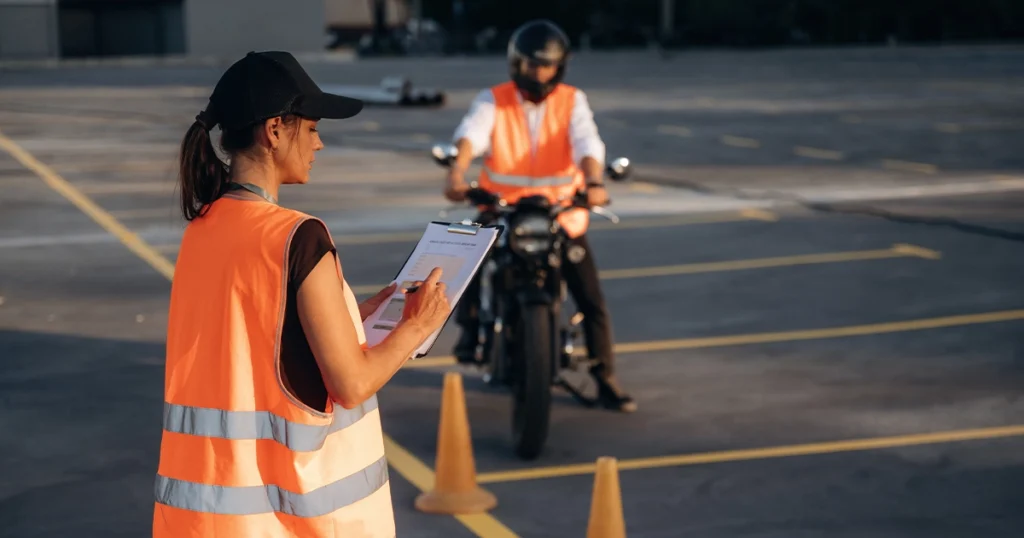
Motorcycle Skills Test in Texas
The motorcycle skills test evaluates your ability to safely control and operate a motorcycle. During the test, riders may be asked to demonstrate:
- Starting and stopping smoothly
- Turning and maneuvering at low speeds
- Proper braking techniques
- Balance and coordination
For many riders, completing a state-approved safety course can waive this requirement, saving time and reducing stress during the application process.
Applying for a Motorcycle License in Houston
Once all testing and training requirements are completed, applicants must visit a Texas DPS office to finalize their motorcycle license application. Required documents typically include:
- Valid Texas driver’s license
- Proof of identity
- Motorcycle safety course completion certificate (if applicable)
- Proof of Texas residency
- Payment of required licensing fees
After approval, the Class M endorsement will be added to your Texas driver’s license, allowing you to legally operate a motorcycle throughout Houston and the rest of the state.
Motorcycle Insurance Requirements in Texas
Texas law requires all motorcycle riders to carry minimum liability insurance when operating on public roads. Failure to maintain insurance coverage can lead to fines, license suspension, and serious financial consequences after an accident. Minimum liability coverage requirements include:
- $30,000 for bodily injury or death of one person
- $60,000 for bodily injury or death per accident
- $25,000 for property damage
Having adequate insurance is essential, particularly given the severity of injuries commonly associated with motorcycle accidents.
Helmet and Motorcycle Safety Laws in Houston
Texas helmet laws require all riders under 21 to wear a helmet, with exemptions for riders over 21 meeting insurance or training criteria (Texas Transportation Code § 661.003). Additional motorcycle-specific regulations include:
- Lane splitting is illegal in Texas
- Riders must obey all traffic laws applicable to other vehicles
- Violations can result in fines and increased liability in accident claims
Understanding and following these laws helps protect both your safety and your legal rights.
Motorcycle Accidents and Legal Considerations
Even experienced and properly licensed riders can suffer serious injuries due to negligent drivers, unsafe road conditions, or distracted motorists on Houston’s congested roads. After a motorcycle crash, factors such as your licensing status, insurance coverage, and compliance with Texas law can affect your ability to recover compensation. Insurance companies closely review these details, making guidance from a Houston motor vehicle accident lawyer essential.
- Investigate the cause of the accident
- Handle communications with insurance companies
- Pursue compensation for medical bills, lost wages, and pain and suffering
Houston Motorcycle Licensing and Legal Support
Obtaining a motorcycle license in Houston is a critical step toward riding legally and responsibly. By understanding Texas licensing requirements, safety training options, and insurance laws, riders can reduce legal risks and focus on enjoying the road.
If you have been injured in a motorcycle accident or need legal guidance related to motorcycle licensing or insurance issues, Lakhani & McGrath can help protect your rights. An experienced Houston motorcycle accident lawyer from our firm can guide you through your legal options and pursue the compensation you deserve.