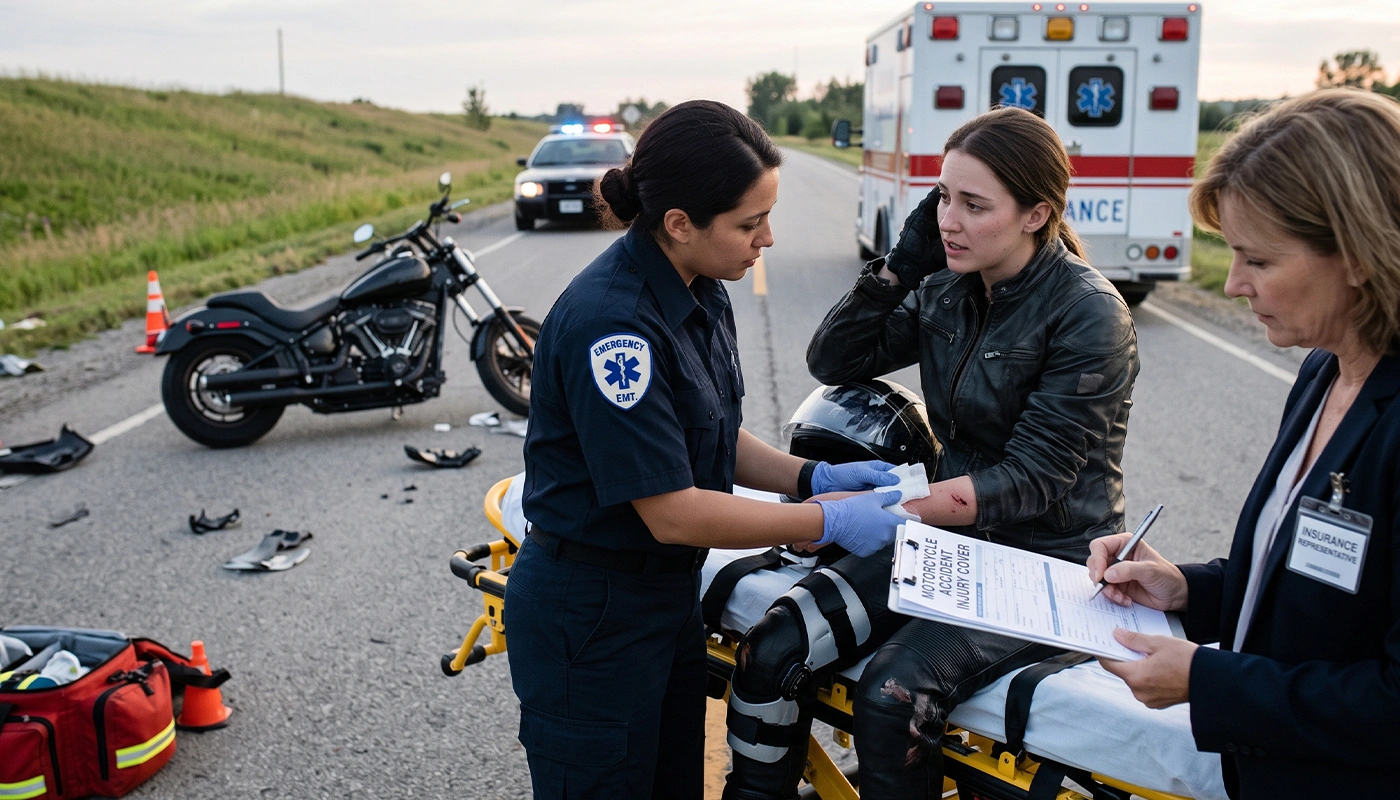

A motorcycle accident can leave victims facing serious injuries, expensive medical treatment, lost income, and long-term physical and emotional challenges. The amount of compensation available after a motorcycle accident depends on several factors, including the severity of the injuries, the evidence available, and who was responsible for causing the crash.
In Texas, injured motorcyclists may be entitled to recover compensation from the at-fault party. A Houston motorcycle accident attorney can help protect your rights and pursue fair compensation.
What Compensation Can You Recover After a Motorcycle Accident?
Motorcycle accident compensation is intended to help injured victims recover both the financial losses and personal hardships caused by the crash. Every case is different, and the amount of compensation depends on the facts surrounding the accident and the extent of the injuries.
Medical Expenses
Medical expenses often represent one of the largest portions of a motorcycle accident claim. Riders frequently suffer severe injuries that require emergency treatment, surgery, hospitalization, rehabilitation, and ongoing medical care. Compensation may include both current medical costs and the reasonable value of future treatment related to the accident.
Lost Wages
Serious motorcycle injuries often prevent victims from returning to work for weeks or even months. Compensation may include income lost during recovery, including salary, hourly wages, commissions, bonuses, and other employment benefits that could not be earned because of the injuries sustained in the accident.
Reduced Earning Capacity
Some injuries permanently affect a person’s ability to perform the same type of work they held before the accident. If the injuries reduce future earning potential or require a career change, compensation may be available for the difference between previous earning capacity and future expected income.
Property Damage
Motorcycle accidents frequently result in extensive damage to the motorcycle and other personal property. Compensation may cover the cost of repairing or replacing the motorcycle, helmet, riding gear, electronic devices, and any other items damaged during the collision. In some cases, victims may also recover expenses related to towing, storage, and temporary transportation while their motorcycle is being repaired or replaced.
Pain and Suffering
Not every loss following a motorcycle accident can be measured through receipts or bills. Compensation may also be awarded for physical pain, emotional distress, mental anguish, permanent disability, loss of enjoyment of life, and the overall impact the injuries have on a victim’s daily activities and quality of life.
The compensation available after a motorcycle accident depends on the severity of your injuries and the losses you have suffered. A motor vehicle accident attorney near me can evaluate your case and help pursue the full compensation you may be entitled to.
What Factors Affect Motorcycle Accident Compensation?
No two motorcycle accident claims have the same value. Insurance companies, attorneys, and courts evaluate numerous factors before determining how much compensation may be available. Important factors include:
- Severity of the Injuries: More serious injuries generally require extensive medical treatment, longer recovery periods, and greater financial losses. Permanent disabilities often increase the overall value of a motorcycle accident claim because of their lasting impact on the victim’s life.
- Medical Treatment Required: The type and duration of medical care play a significant role when calculating damages. Emergency treatment, surgeries, rehabilitation, future medical care, and ongoing therapy can all increase the amount of compensation that may be recovered.
- Lost Income and Future Earnings: Victims who miss substantial time from work or permanently lose earning capacity may recover greater compensation than someone who returns to work shortly after the accident. Future financial losses are often considered alongside current wage losses.
- Available Evidence: Strong evidence such as police reports, witness statements, medical records, photographs, surveillance footage, and accident reconstruction findings can significantly strengthen a claim. Well-documented cases are generally easier to prove during settlement negotiations or litigation.
- Insurance Coverage: The amount of available insurance coverage can affect the total compensation that may ultimately be recovered. Claims involving commercial vehicles or multiple liable parties may provide access to higher insurance policy limits than standard passenger vehicle accidents.
Understanding these factors can help you better estimate your potential compensation and make informed decisions throughout the claims process.
Can You Recover Compensation if You Were Partially at Fault?
Yes. Under Texas Civil Practice and Remedies Code § 33.001, you may still recover compensation even if you were partially responsible for a motorcycle accident, provided you are 50% or less at fault. Texas follows a modified comparative fault rule, meaning your compensation is reduced by the percentage of fault assigned to you. For example, if you are found 20% responsible, your total compensation will be reduced by 20%. However, if you are more than 50% at fault, you cannot recover damages under Texas law.
Because insurance companies often dispute fault percentages, strong evidence is important to protect your claim. A motorcycle accident lawyer near me can help challenge unfair fault allegations and pursue the compensation you may be entitled to recover.
How Does Texas Comparative Fault Affect Compensation?
Texas applies the modified comparative fault rule under Texas Civil Practice and Remedies Code § 33.001, which determines how compensation is awarded when multiple parties share responsibility for an accident. If you are 50% or less at fault, you may still recover damages, but your compensation will be reduced by your percentage of fault. For example, if you are awarded $80,000 and found 25% responsible, you would receive $60,000. However, if you are more than 50% at fault, you are not eligible to recover compensation under Texas law. Insurance companies often use comparative fault arguments to reduce payouts, making strong evidence crucial to support your claim.
How Comparative Fault Reduces Compensation
Under Texas Civil Practice and Remedies Code § 33.001, if a rider is awarded $200,000 in damages but is found 20 percent responsible for the motorcycle accident, the total recovery would be reduced by 20 percent. For example:
- 10% Fault: Compensation reduced by 10 percent. The injured rider may still recover most of the awarded damages because only a small percentage of fault has been assigned.
- 25% Fault: Compensation reduced by 25 percent. Although the rider shares some responsibility for the accident, they may still recover a significant portion of their losses under Texas law.
- 50% Fault: Compensation reduced by 50 percent. A rider who is equally responsible for the collision may still recover compensation, but only half of the total damages awarded.
- More Than 50% Fault: Compensation is barred under Texas law. If the injured rider is found to be more than 50 percent responsible for causing the accident, they generally cannot recover damages from the other party.
Insurance companies frequently attempt to assign a greater percentage of fault to injured motorcyclists because doing so can significantly reduce the amount they are required to pay.
What Evidence Can Increase the Value of a Motorcycle Accident Claim?
The strength of the evidence often plays a major role in determining how much compensation an injured rider may recover. Preserving evidence as soon as possible after the accident can make it easier to establish liability and prove the full extent of the damages. Important evidence may include:
- Police Accident Reports: Official crash reports often contain driver information, witness statements, roadway conditions, officer observations, and traffic citations that may help establish liability during settlement negotiations or litigation.
- Medical Records: Medical documentation connects the injuries directly to the motorcycle accident while demonstrating the treatment received, future medical needs, and the overall severity of the injuries sustained.
- Photographs and Videos: Pictures of vehicle damage, skid marks, road conditions, traffic signals, weather conditions, and visible injuries preserve important evidence that may no longer exist after the accident scene has been cleared.
- Witness Statements: Independent witnesses can provide unbiased accounts of how the collision occurred. Their testimony may help resolve conflicting versions of events and strengthen an injured rider’s claim.
- Traffic Camera and Surveillance Footage: Video recordings captured by traffic cameras, nearby businesses, or residential surveillance systems may clearly show how the accident occurred and identify the party responsible for causing the collision.
- Motorcycle and Vehicle Damage Assessments: The location and severity of vehicle damage often help investigators determine the sequence of events leading to the crash and support accident reconstruction findings.
- Accident Reconstruction Analysis: In complex motorcycle accident cases, experts may examine physical evidence, impact points, roadway conditions, and vehicle damage to determine exactly how the collision occurred and identify the responsible parties.
Strong evidence not only helps establish fault but also allows attorneys to demonstrate the full extent of the financial and personal losses suffered by the injured rider.
Can Insurance Companies Reduce Your Compensation?
Yes. Insurance companies often attempt to reduce the amount they pay by challenging liability, questioning the severity of injuries, or arguing that the motorcyclist shares responsibility for the accident. Understanding these tactics can help injured riders protect their claims. Common insurance company tactics include:
- Assigning More Fault to the Rider: Insurance adjusters may argue that the motorcyclist was speeding, riding aggressively, or otherwise contributed to the accident in an effort to reduce compensation under Texas comparative fault laws.
- Questioning the Severity of Injuries: Insurers sometimes claim that injuries are less serious than medical records indicate or argue that certain medical treatment was unnecessary to reduce the value of the claim.
- Disputing Future Medical Expenses: Insurance companies may challenge whether ongoing treatment, rehabilitation, or future surgeries are actually necessary, even when recommended by medical professionals.
- Making Early Settlement Offers: Shortly after the accident, insurers may offer settlements that fail to account for future medical care, lost earning capacity, or long-term pain and suffering before the full extent of the injuries is known.
- Delaying the Claims Process: Some insurance companies intentionally delay investigations or request unnecessary documentation, hoping injured victims will accept lower settlements because of mounting financial pressure.
Carefully documenting your damages and preserving strong evidence can make it more difficult for insurance companies to unfairly reduce the value of a motorcycle accident claim.
Why Does Legal Representation Matter?
Motorcycle accident claims often involve serious injuries, disputed liability, and insurance companies that aggressively attempt to minimize payouts. Having our experienced Houston personal injury attorney can help protect your rights, preserve critical evidence, and pursue the maximum compensation available under Texas law. An experienced attorney can:
- Investigate the Accident Thoroughly: A lawyer can examine police reports, interview witnesses, review photographs and video footage, and gather additional evidence to determine exactly how the motorcycle accident occurred and who should be held responsible.
- Preserve Critical Evidence: Important evidence such as surveillance footage, electronic data, witness testimony, and physical evidence may disappear over time. An attorney can act quickly to preserve this information before it becomes unavailable.
- Accurately Calculate Your Damages: Motorcycle accident claims often include more than immediate medical bills. An attorney can evaluate future medical expenses, lost earning capacity, pain and suffering, and other long-term damages to determine the true value of the claim.
- Handle Insurance Company Negotiations: Insurance adjusters frequently attempt to reduce settlement amounts by disputing fault or minimizing injuries. A lawyer can communicate with insurers, challenge unfair tactics, and negotiate for a fair settlement on your behalf.
- Work With Qualified Experts: In complex cases, attorneys may consult accident reconstruction specialists, medical professionals, vocational experts, and financial experts to strengthen the claim and establish the full extent of the damages.
- Prepare the Case for Trial if Necessary: If a reasonable settlement cannot be reached, an attorney can present evidence in court, advocate for your interests, and pursue the compensation you deserve through litigation.
Having experienced legal representation allows injured riders to focus on recovery while their attorney handles the legal process and works to maximize financial recovery.
When Should You Contact a Motorcycle Accident Lawyer?
The sooner an attorney becomes involved after a motorcycle accident, the greater the opportunity to preserve evidence and protect your legal rights. Early legal representation can also help prevent costly mistakes when dealing with insurance companies. You should consider contacting a lawyer immediately if:
- You Suffered Serious Injuries: Severe injuries often result in significant medical expenses, lengthy recovery periods, and permanent limitations. An attorney can evaluate the full extent of your damages and pursue appropriate compensation.
- Liability Is Being Disputed: If the insurance company argues that you caused the accident or attempts to assign you an unfair percentage of fault, legal representation can help gather evidence to challenge those allegations.
- Multiple Parties May Be Responsible: Some motorcycle accidents involve more than one liable party, including another driver, a commercial vehicle operator, an employer, a manufacturer, or a government entity. Identifying every responsible party may increase the compensation available.
- The Insurance Company Offers a Low Settlement: Initial settlement offers frequently fail to account for future medical treatment, lost earning capacity, or long-term pain and suffering. A lawyer can determine whether the offer reflects the true value of your claim.
- Important Evidence Needs to Be Preserved: Surveillance footage, vehicle damage, electronic records, and witness testimony may become unavailable over time. Prompt legal action can help preserve evidence before it is lost.
Acting quickly is also important because Texas Civil Practice and Remedies Code Section 16.003 generally requires most personal injury lawsuits to be filed within two years from the date of the motorcycle accident.
Injured in a Motorcycle Accident? Contact Lakhani & McGrath
Recovering compensation after a motorcycle accident often requires strong evidence, a thorough investigation, and an understanding of Texas personal injury law. At Lakhani & McGrath, our team works to identify every available source of compensation while protecting injured riders from unfair insurance company tactics.
We investigate motorcycle accidents, gather critical evidence, negotiate with insurance companies, and pursue the maximum compensation available for our clients. If you were injured in a motorcycle accident, contact us today for a free case evaluation.